
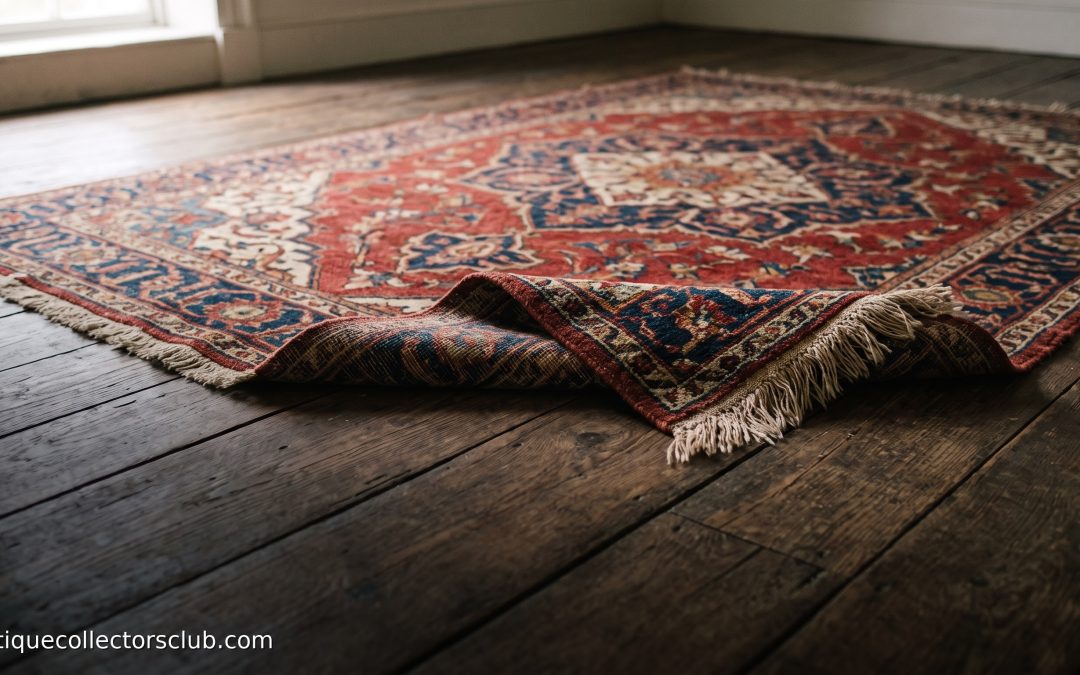
A good antique Persian rug is one of the few antiques you can use every day and still watch grow more beautiful. It’s also a field full of jargon, reproductions, and confident sales talk. Knowing a few basics about how rugs are made and how they age will help you tell a real antique from a decorative copy, and a fair price from a fantasy.
A Very Old Tradition
Knotted pile carpets were made in Persia, modern Iran, for many centuries. The most famous surviving example is the Ardabil Carpet in the Victoria and Albert Museum, which the V&A describes as the world’s oldest dated carpet. It carries an inscription dated to 1539 to 1540, and the museum estimates that up to ten weavers may have worked on it at one time.
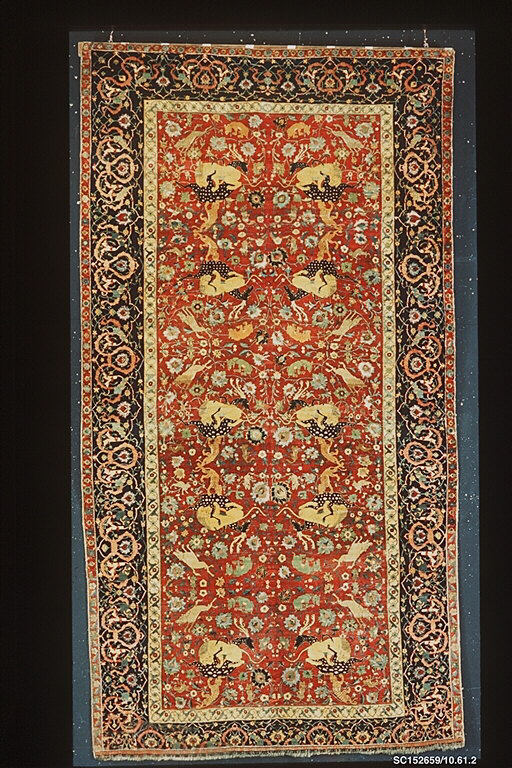
Interest in Persian carpets in the West grew enormously in the 19th century. When the V&A bought the Ardabil Carpet in 1893, William Morris was among its champions, as HALI’s history of carpet collecting at the V&A recounts. Western demand also changed the trade itself, with workshops producing rugs in sizes and colors to suit European and American homes.
What “Antique” Means
Dealers generally call a rug antique when it is at least about 100 years old. “Semi-antique” and “vintage” usually describe rugs from the middle decades of the 20th century. These are trade terms rather than legal ones, so always ask for an approximate date and the reasoning behind it.
Turn It Over
The back of a rug tells you more than the front.
- Hand knotting. On a hand-knotted rug, the design shows clearly on the back, and the knots are slightly irregular. Machine-made rugs look too perfect, and many have a stiff latex or canvas backing.
- The fringe. On a hand-knotted rug, the fringe is the ends of the warp threads that run through the whole rug. A fringe that’s sewn on as a separate strip is a warning sign.
- Knot density. Count the knots along one inch horizontally and one inch vertically and multiply the two to get knots per square inch. Fine city workshop rugs are densely knotted, while village and tribal rugs are coarser. Density is a sign of labor, not automatically of quality or value. As Claremont Rug Company points out in its guide to evaluating antique carpets, some very finely knotted 20th century rugs lost much of the artistry of earlier work.
Color and Dyes
Before the late 19th century, rug dyes came from plants and insects: madder for reds, indigo for blues, weld and other plants for yellows. These natural dyes age gracefully and soften into each other.
Synthetic aniline dyes arrived in the second half of the 19th century. Many early ones faded badly or ran, which is why some rugs from around 1900 show odd washed-out colors. Later chrome dyes were far more stable. A trained eye can often date a rug partly by its dyes.
Look for abrash, the gentle bands of color variation across the field of a rug. It happens because wool was dyed in small batches, and it’s a natural feature of handmade rugs rather than a flaw. Perfectly even color across a big field suggests modern dyes.
Some Names to Know
- Heriz and Serapi. Bold, geometric, and tough, from northwest Iran. Older Serapi rugs are especially prized.
- Tabriz. A major city workshop center, producing everything from fine silk rugs to large room carpets.
- Kashan and Isfahan. Fine, densely knotted city rugs with elaborate floral designs.
- Sarouk. Especially popular in America in the early 20th century, often in deep reds and blues.
- Tribal and village rugs. Qashqai, Afshar, Bakhtiari, and many others, prized for their spontaneous designs and color.
Condition and Value
- Pile. Even, healthy wear is acceptable. Rugs worn down to the knots in large areas are worth much less.
- Foundation. Fold a corner gently. Cracking sounds or brittleness suggest dry rot, which is serious.
- Repairs and painting. Reweaving is normal on old rugs. Areas where worn spots have been colored in with ink or dye should be disclosed.
- Moth and stains. Check the back and under furniture marks.
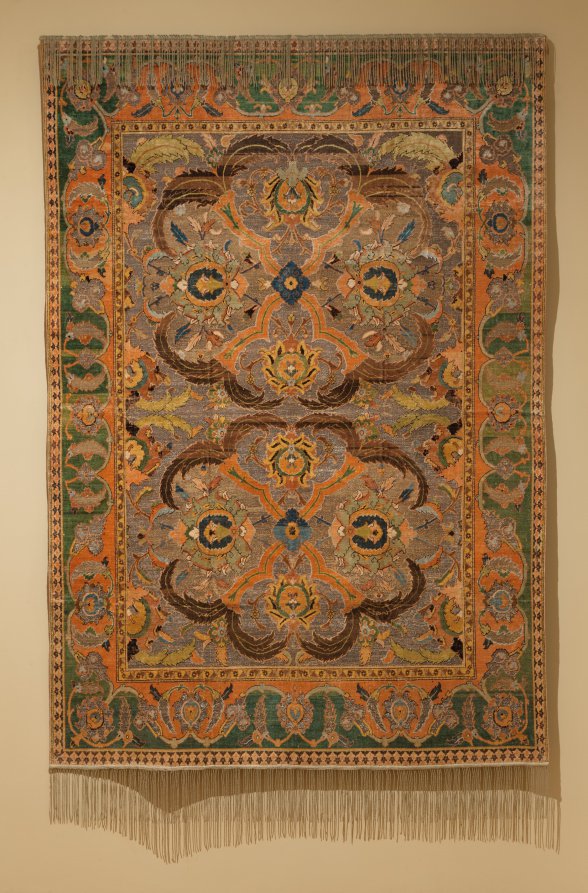
- Design and color. Above all, collectors pay for beautiful drawing and harmonious natural color, then rarity, age, and condition.
Buying and Care
Buy from specialist rug dealers or auction houses that give a dated description and condition report, and be wary of permanent “going out of business” sales. Use a good rug pad, rotate rugs every year or two so they wear evenly, keep them out of strong sunlight, and have them professionally cleaned rather than shampooed at home. Old auction catalogs are also a great way to train your eye. See our guide to collecting auction catalogs.
Disclaimer: This article is for general information only and is not an appraisal. Rug dating and attribution take hands-on expertise, so consult a qualified rug specialist before making a significant purchase.
© 2026 by antiquecollectorsclub.com All rights reserved. No part of this document may be reproduced or transmitted in any form or by any means, electronic, mechanical, photocopying, recording, or otherwise, without prior written permission.