
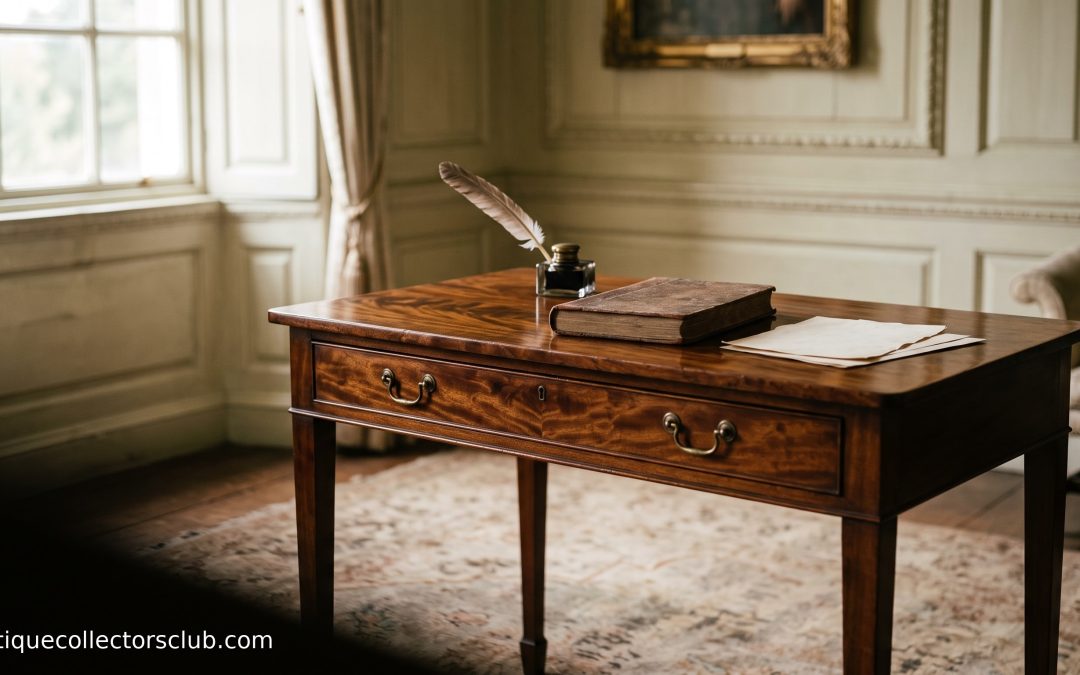
Some furniture makers are famous for one designer’s genius. Gillows of Lancaster is famous for something harder to pull off: two centuries of consistently excellent, practical furniture, made in a provincial town and sold to some of the best houses in Britain. The name turns up in Jane Austen’s world and on the brass plates of Edwardian ocean liners, and it still means quality to dealers today.
This guide covers the firm’s history, how to read a Gillows stamp, and why an attribution is only as good as the evidence behind it.
From Lancaster to Oxford Street
Robert Gillow, born in 1704 in the Fylde area of Lancashire, set up as a joiner and cabinetmaker in Lancaster around 1730. Lancaster was a busy port in the West Indies trade, and that mattered. Gillow could import fine Caribbean mahogany directly and ship finished furniture back out, so the business was part workshop and part merchant house from the start.
His sons Richard and Robert expanded the firm, and by the 1770s Gillows had a London showroom on Oxford Street. Furniture was made in Lancaster and sent south, while the London side kept the firm close to fashion. The result was a rare combination: London style, Lancashire workmanship, and the business discipline of a merchant family.
Gillows worked through every major style of the period, from Chippendale-era mahogany through the neoclassical taste of Hepplewhite and Sheraton, Regency, and on into the Victorian and Edwardian years. In 1903 the firm merged with Warings of Liverpool to become Waring & Gillow, which fitted out hotels, ships, and houses well into the 20th century.
The Records That Make Gillows Special
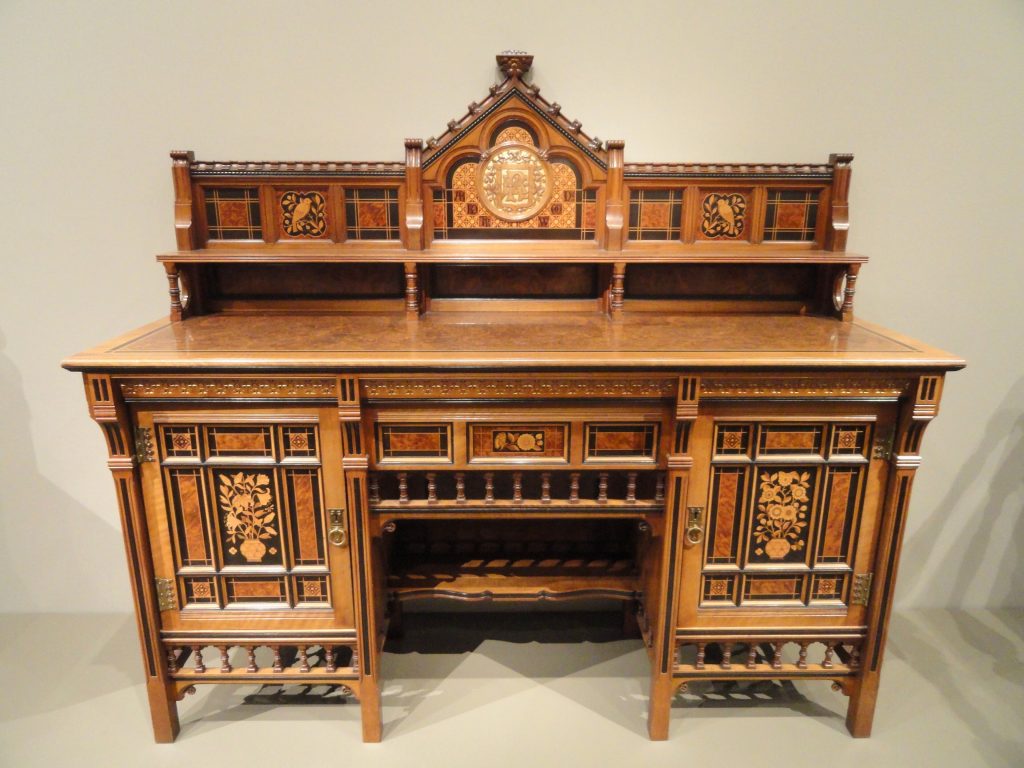
What sets Gillows apart for collectors is paperwork. The firm kept estimate books and estimate sketch books recording designs, timbers, costs, and often the customer. When the archive was threatened with export in the 1960s, it was bought for the nation, and today the records are held by the City of Westminster Archives Centre, as the National Archives catalogue entry for the Gillow records shows, with material also in Lancashire.
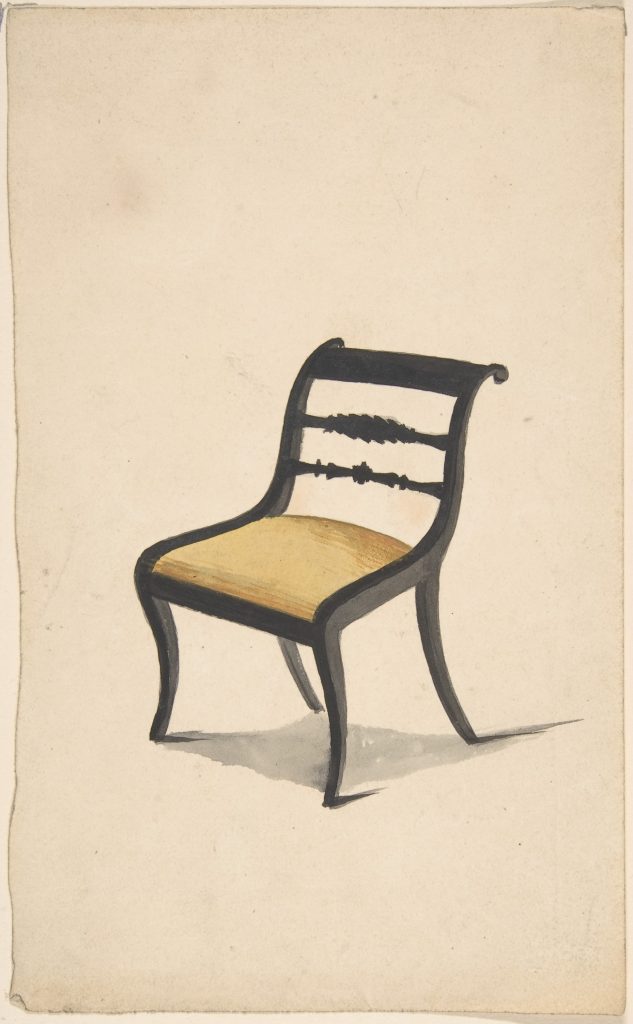
Those sketch books are the key to many attributions. As the Regional Furniture Society’s introduction to Gillows explains, some furniture was stamped from about 1788, and other pieces can be identified by matching them to designs in the sketch books.
The best place to see Gillows furniture in its home town is the Judges’ Lodgings Museum in Lancaster, which holds a major collection, including the celebrated mahogany bookcase Richard Gillow made in 1772 for Mary Hutton Rawlinson.
Reading the Stamps
Gillows stamped a good share of its output, though never all of it. The marks changed over time, which helps with dating.
- Gillow and Taylor. An early printed label from the 1770s. Labels tore and fell off, so survivals are rare.
- GILLOWS LANCASTER. The classic impressed stamp, used from roughly the 1780s to the mid-19th century.
- GILLOW. A simpler stamp used from around 1850.
- L and a serial number. From the later 19th century, a number prefixed with L often appears alongside the name.
- GILLOW & CO and WARING & GILLOW. Late Victorian and 20th century marks, the latter sometimes on a brass plate.
Look for stamps on the top edges of drawer fronts, under table tops, on the back rails or legs of chairs, and inside carcasses. Workmen sometimes added their own names in pencil or stamped them beside the firm’s mark. For the fullest account, Susan Stuart’s survey of Gillow marks, labels, and stamps from 1770 to 1960 is the reference to read.
What Gillows Made Well
- Mahogany of the best quality. Dense, well-figured Caribbean timber, carefully chosen and matched.
- Practical design. Gillows was known for clever, sturdy furniture: extending dining tables, library and writing tables, dressing tables with fitted interiors, and campaign-style pieces. The small Davenport desk is often traced to a Gillows order for a Captain Davenport.
- Restraint. Gillows furniture tends to rely on proportion, timber, and fine detail rather than heavy ornament, which is part of why it still looks good in modern rooms.
- Construction. Neat dovetails, quality brass fittings and locks, and secondary woods chosen for the job.
Stamped, Attributed, or Just in the Style
Because Gillows was so admired, a lot of good Lancashire and London furniture gets the Gillows name attached at auction. Learn to read the wording.
- “Gillows” or “stamped Gillows.” The piece carries an original mark. Check that the stamp is in a sensible place and looks period, not newly struck.
- “Attributed to Gillows.” There’s no stamp, but the cataloguer believes the evidence points to the firm. Ask what that evidence is. A match to a design in the sketch books is strong; “the quality is very good” is not.
- “In the manner of” or “Gillows style.” Somebody else made it. It may still be fine furniture, but it should be priced that way.
Old auction catalogs are a good way to see how attributions have been argued over time, and they’re collectible in their own right. See our guide to collecting auction catalogs. If you’re interested in the earlier, pre-mahogany tradition of English furniture, our guide to early English oak furniture is a good companion read.
Buying Gillows Today
Georgian and Regency Gillows furniture with a stamp and good original surface sells well above unattributed furniture of similar quality, while later Victorian and Waring & Gillow pieces are often surprisingly affordable for what they are. Whatever the period, check for replaced tops, marriages between bases and tops, re-veneering, and later stamps. Buy from dealers and auction houses that photograph the mark and explain any attribution.
Disclaimer: This article is for general information only and is not an appraisal or authentication. Attributions to Gillows vary widely in strength, so consult a qualified furniture specialist before making a significant purchase.
© 2026 by antiquecollectorsclub.com All rights reserved. No part of this document may be reproduced or transmitted in any form or by any means, electronic, mechanical, photocopying, recording, or otherwise, without prior written permission.