
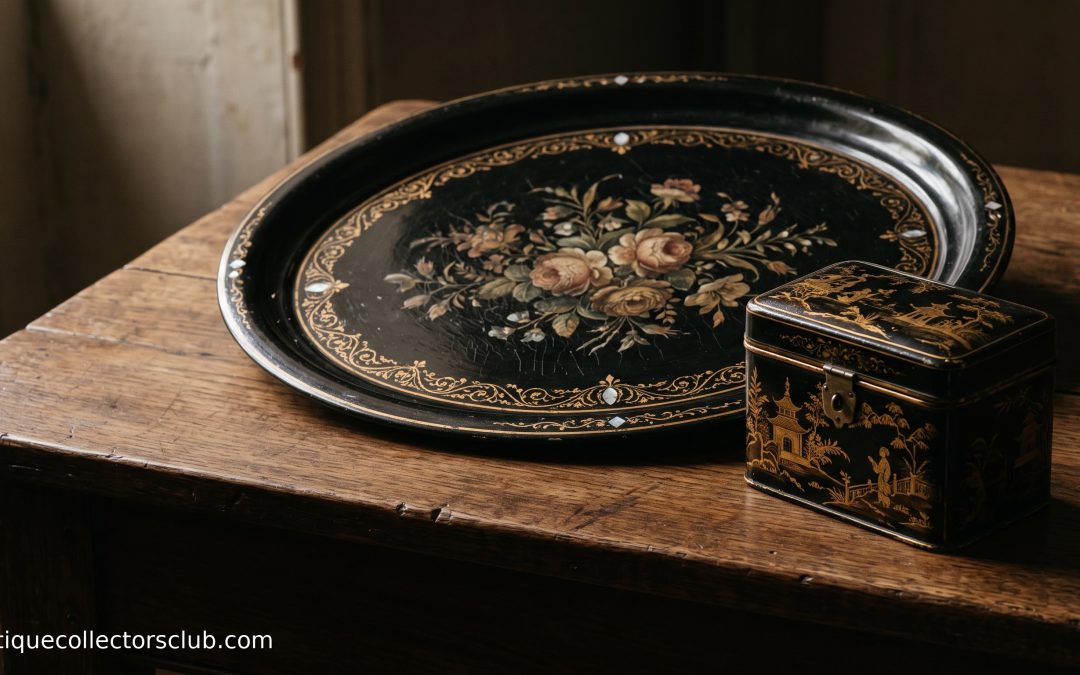
Long before plastic, British manufacturers found a way to give everyday objects the glossy black look of Asian lacquer. The process was called japanning, and for about two centuries it covered trays, tea caddies, boxes, coal scuttles, chairs, and even pianos. Japanned papier-mâché and tinware are now some of the most decorative and still reasonably priced British antiques you can collect.
What Is Japanning?
Lacquerware from China and Japan was hugely fashionable in 17th century Europe, but true Asian lacquer was expensive and hard to copy. Japanning was the European answer: layer after layer of varnish, usually black, applied to metal, wood, or papier-mâché, each layer heated in a stove to harden it, then polished. The surface could be painted, gilded, or later inlaid with mother-of-pearl.
Pontypool and the Midlands
In Britain, japanning on tinplated iron grew up first around Pontypool in south Wales. According to Amgueddfa Cymru, Museum Wales, the Allgood family began making japanned ware in Pontypool around 1730. A family split later produced a rival works in nearby Usk, and collectors still use “Pontypool” loosely for early japanned tinware of this type.
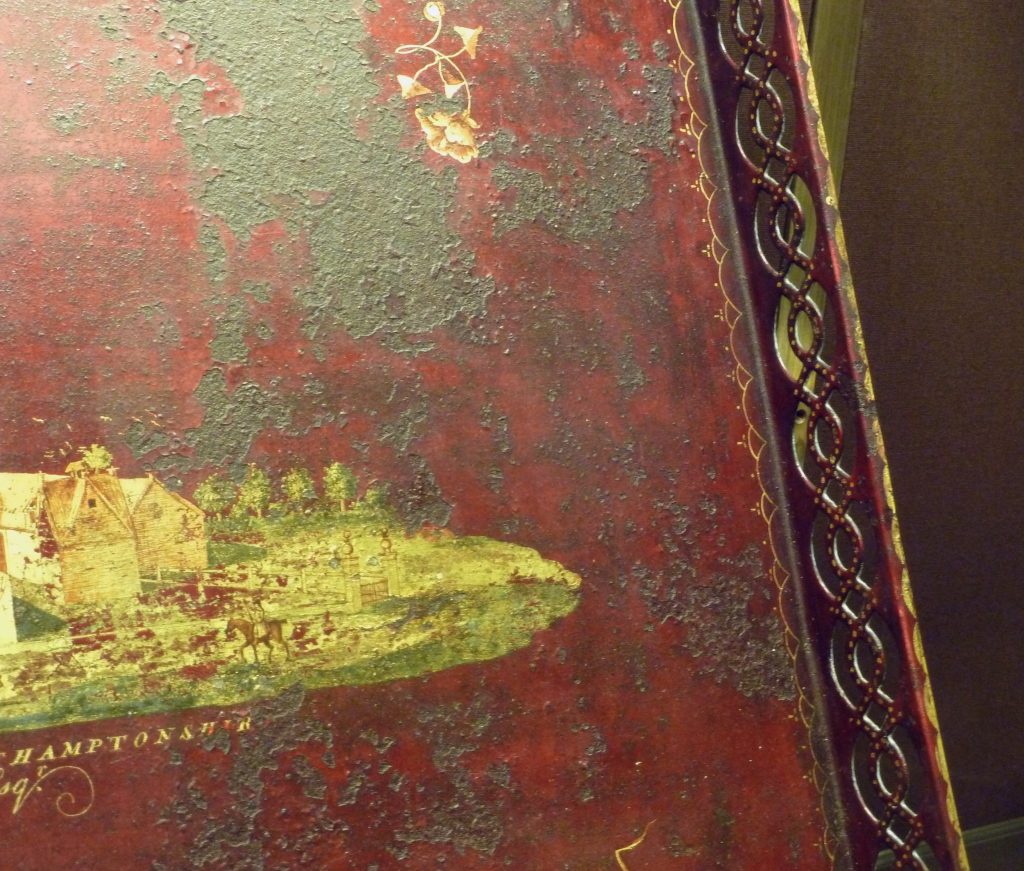
The trade soon took hold in the English Midlands too. Bilston, Wolverhampton, and Birmingham became the centers of the industry, turning out enormous numbers of trays, boxes, and household goods for home and export.
The Rise of Papier-Mâché
The great change came in 1772, when Birmingham maker Henry Clay patented a tough, heat-resistant board made from layers of pasted paper. As the Victoria and Albert Museum notes on a Clay tray in its collection, the material could be cut, carved, and lacquered like wood or metal, was light, and didn’t warp, which made it an ideal base for japanned decoration.
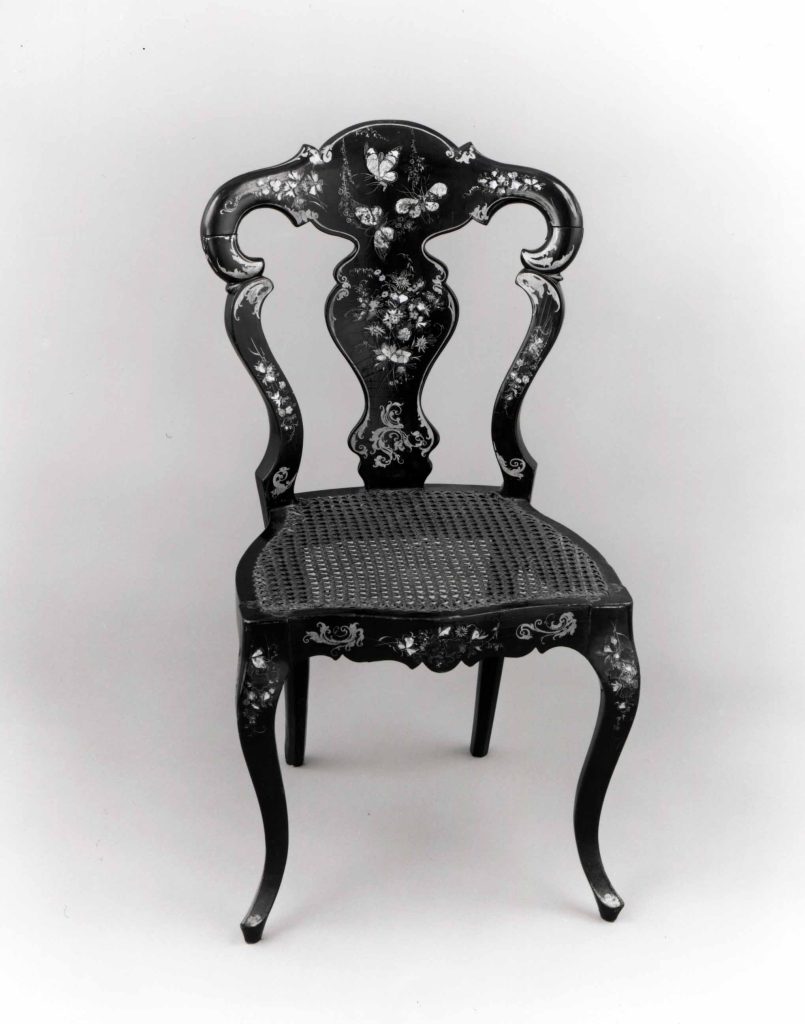
In 1816 Clay’s workshops were taken over by Jennens and Bettridge, who became the best-known name in the trade. Grace’s Guide records their 1825 patent for decorating papier-mâché with pearl shell, and the firm went on to make everything from small boxes to cabinets, chairs, and tables. By the time of the Great Exhibition in 1851, Birmingham papier-mâché was a showpiece of British manufacturing.
Tin or Paper?
It isn’t always obvious which you’re holding, and decorators often worked on both. Yvonne Jones, whose research overturned many old assumptions about the trade, found that tinware and papier-mâché were often decorated in the same workshops by the same craftsmen, as the Antiques Trade Gazette reported when her study was published. A few simple checks help:
- A magnet. It will stick to tinplated iron, not to papier-mâché.
- Weight and sound. Papier-mâché is light and gives a dull knock. Tinware is heavier and rings.
- Damage. Tinware dents and rusts, often showing orange spots where the japanning has chipped. Papier-mâché can crack, split along its layers, or warp if it gets damp.
- Edges. Papier-mâché trays often have thick, molded edges. Tin trays are thinner, with rolled or wired rims.
Decoration and Marks
Early pieces favor gilt chinoiserie and fine painted borders on black grounds. Later work brings in bold flowers, landscapes, and copies of famous paintings, and from the 1820s and 1830s, glittering mother-of-pearl inlay. By the mid-Victorian period, decoration could be very elaborate, sometimes with Gothic or rococo revival forms.
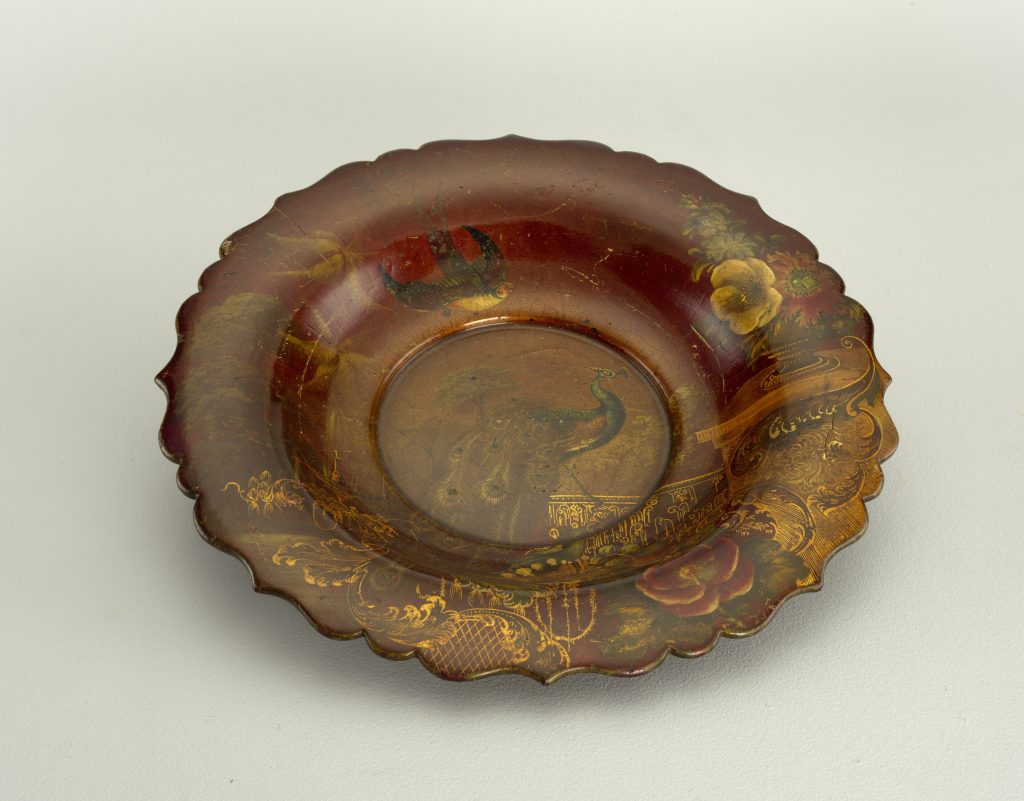
Some papier-mâché is marked. Clay pieces may carry an impressed Clay name with a London address, and Jennens and Bettridge often impressed their name, sometimes with a crown, on the underside. Most japanned tinware is unmarked, so attribution to a particular town or maker is usually a matter of style and expert judgment.
What to Check Before You Buy
- Surface. Fine crazing is normal. Large areas of flaking, heavy wear to gilding, or overpainting reduce value.
- Restoration. Look at the decoration under strong light. Fresh, flat-looking paint or gilding that sits on top of old damage suggests touch-ups.
- Reproductions. Later 20th century trays with printed or transfer decoration are common. Under a loupe, printing shows a dot pattern rather than brushstrokes.
- Structure. Check papier-mâché trays for warping and splits, and tinware for rust coming through from the back.
Fine, large trays and furniture by the leading makers bring the highest prices, but small boxes, snuffboxes, coasters, and Victorian trays are still affordable starting points. The standard reference is Yvonne Jones’s Japanned Papier Mâché and Tinware c.1740-1940. Old auction catalogs are another great way to learn what good examples look like. See our guide to collecting auction catalogs.
Disclaimer: This article is for general information only and is not an appraisal or authentication. Consult a qualified specialist before making a significant purchase or attempting any cleaning or restoration.
© 2026 by antiquecollectorsclub.com All rights reserved. No part of this document may be reproduced or transmitted in any form or by any means, electronic, mechanical, photocopying, recording, or otherwise, without prior written permission.