
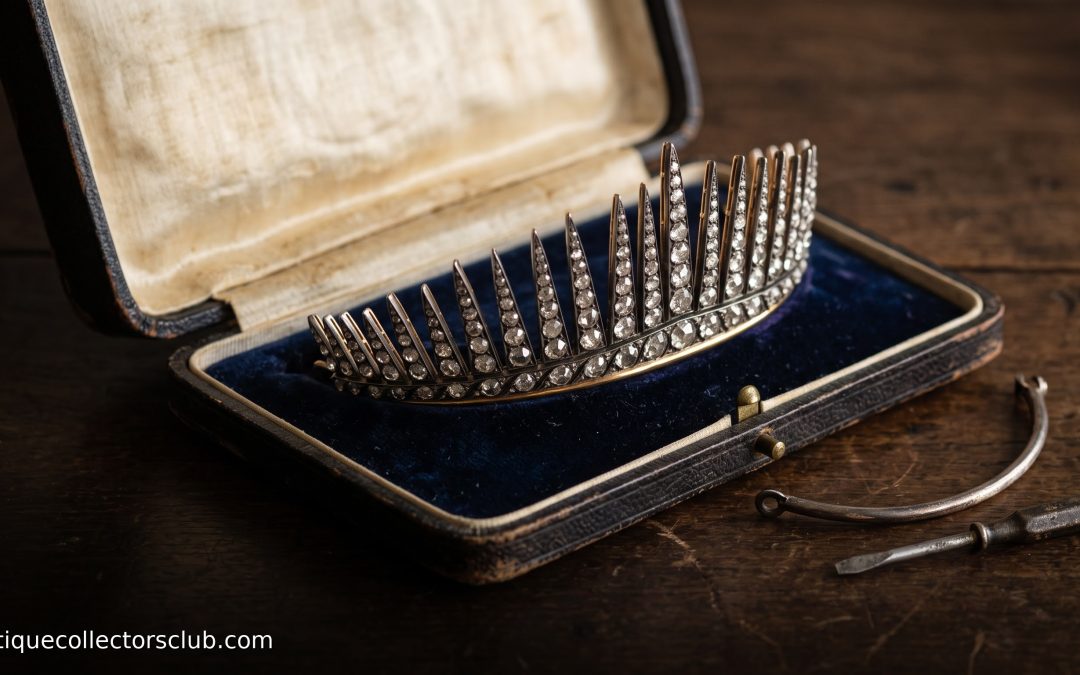
Nothing in jewelry says “occasion” quite like a tiara. For most of the 19th century and into the 20th, a tiara was a normal part of formal evening dress for married women in society, not just royalty. Today antique tiaras are some of the most romantic jewels you can collect, and many of them are cleverer than they look, built to come apart and be worn in several different ways.
From Ancient Diadem to Empire Style
Headbands and wreaths of gold go back to the ancient world, but the tiara as we think of it took off in Napoleonic France. Napoleon and Empress Joséphine deliberately borrowed the look of imperial Rome, and their court jewelers made tiaras central to official dress. The Paris house of Chaumet traces its tiara tradition to that era, and Sotheby’s notes that Chaumet has made more than 2,000 tiaras over its history.
Across Europe, the fashion spread through the 19th century. In Britain a tiara became part of a full suite of jewels for court, the opera, and grand dinners, and families commissioned pieces that were passed down through the generations.
Styles Through the Century
- Neoclassical. Early 19th century tiaras with cameos, laurel leaves, and Greek key or pediment shapes.
- Naturalistic. Mid-Victorian sprays of flowers, leaves, and wheat ears, often with diamonds set in silver over gold, sometimes mounted “en tremblant” on springs so they shimmered as the wearer moved.
- Fringe and halo. Inspired by the Russian kokoshnik, these rows of tapering spikes or radiating bars were hugely popular in the later 19th century, as Sotheby’s history of tiaras describes.
- Belle Époque and Edwardian. Light, lacy garlands, bows, and swags, made possible by the new use of platinum around 1900.
- Art Deco. Flat bandeaux worn low across the forehead to suit short, bobbed hair in the 1920s.
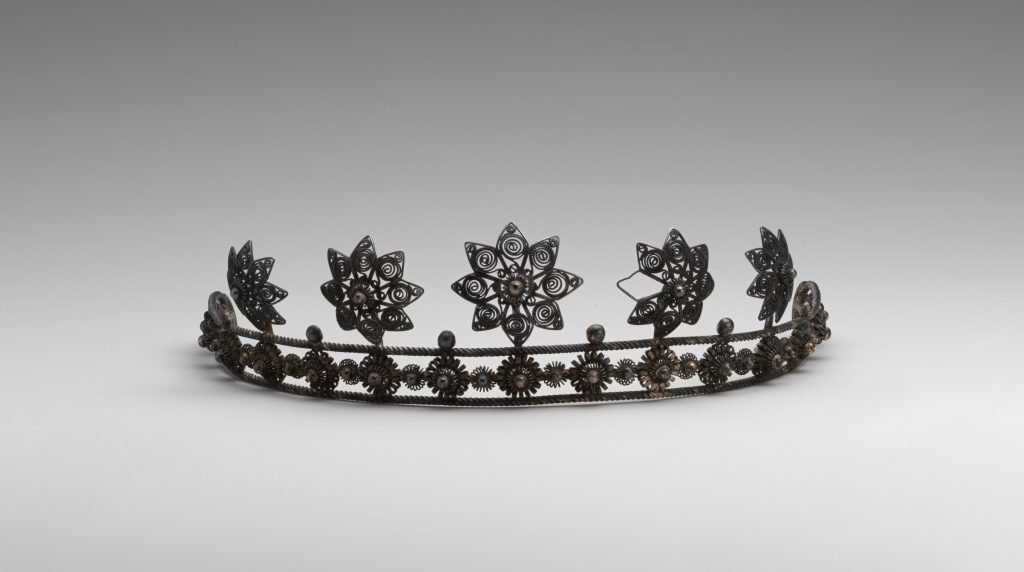
The grand modern survey of the subject was the Victoria and Albert Museum’s 2002 exhibition of about 200 tiaras, curated with the jewelry historian Geoffrey Munn, whose book Tiaras: A History of Splendour remains the standard reference.
Convertible Tiaras
Many antique tiaras were designed to do more than one job. The jeweled section often detaches from its tiara frame to be worn as a necklace, and individual elements can unscrew to become brooches or hair ornaments. A complete example still has its tiara frame, necklace fitting, brooch fittings, and the small screwdriver or spare screws that came with it, all in the original fitted case.
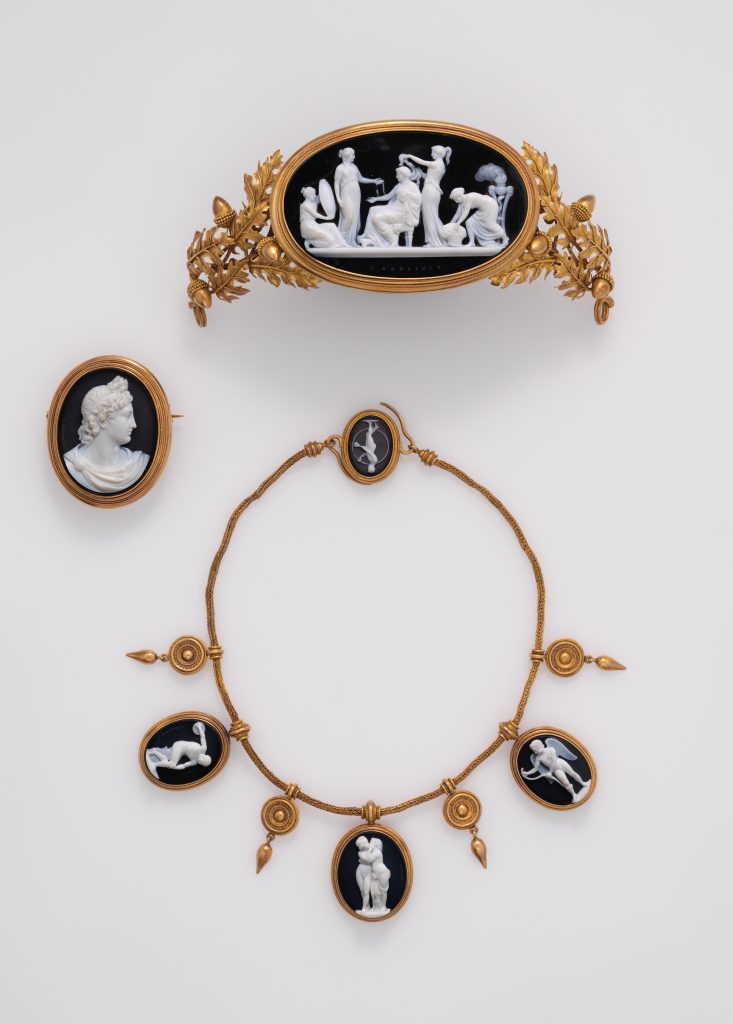
These extras matter. A tiara that still has its original frame and case from a known jeweler is more desirable than one that has lost its fittings or had a modern frame made for it.
How to Look at an Antique Tiara
- The setting metal. Most 19th century diamond tiaras are set in silver backed with gold, so the silver flatters white diamonds while the gold adds strength. Platinum points to around 1900 or later.
- The diamond cuts. Old mine and old European cuts, and rose cuts, suit an antique date. Modern brilliant cuts throughout suggest later work or replacement stones.
- The frame and fittings. Check that the frame fits the jeweled part properly and isn’t a crude later addition. Look for repairs with lead solder, which is a problem.
- Completeness. Look for empty settings, missing elements, or bent spikes in fringe tiaras.
- Marks and case. Maker’s marks, a signed case, or a documented provenance can add a great deal.
The Market
Tiaras cover a huge price range. Major historic and royal pieces sell for millions, but many good Victorian and Edwardian tiaras sell for far less, especially convertible ones that can be worn as necklaces. Christie’s guide to collecting tiaras shows the spread, from diamond tiaras of around 1890 selling in the tens of thousands of pounds to important pearl and diamond tiaras selling for millions of Swiss francs.
If tiaras lead you into the wider world of antique jewelry, our guides to Wartski and the great British jewelry houses and to Suzanne Belperron are good next reads, and you can browse antique and vintage pieces in TheHistoryShop’s jewelry collection.
Disclaimer: This article is for general information only and is not an appraisal. Gem identification and dating require hands-on examination, so consult a qualified jeweler or gemologist before making a significant purchase.
© 2026 by antiquecollectorsclub.com All rights reserved. No part of this document may be reproduced or transmitted in any form or by any means, electronic, mechanical, photocopying, recording, or otherwise, without prior written permission.