
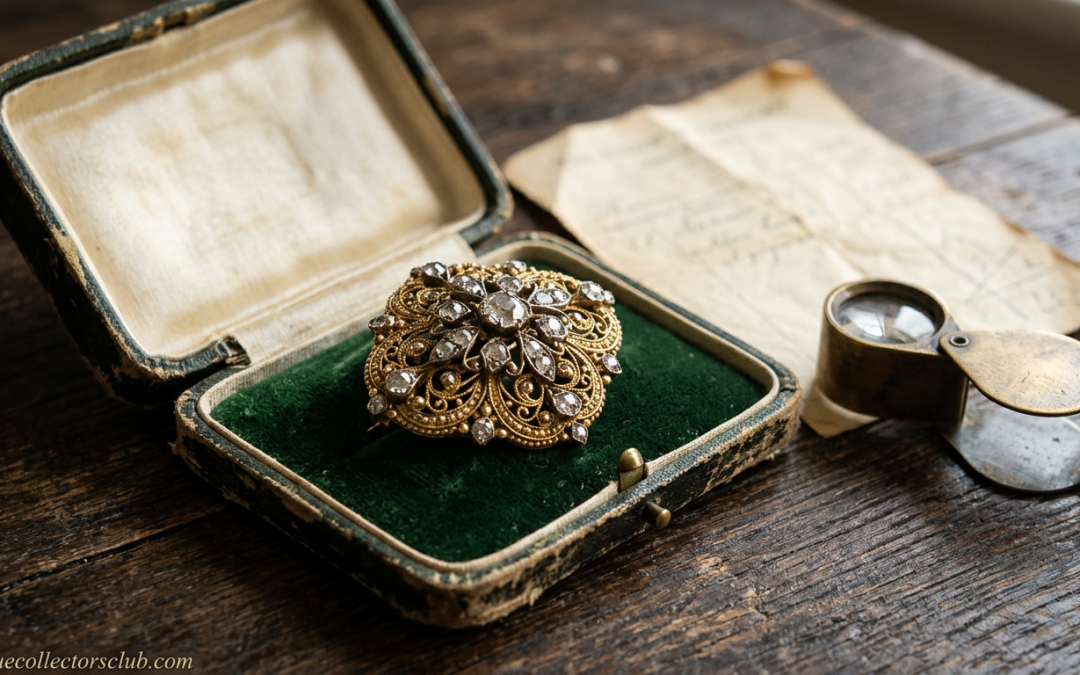
A handful of London firms have shaped British jewelry for well over a century. Their names turn up inside ring boxes, on the backs of brooches, and in the provenance lines of auction catalogs, and they can add real value to a piece. For collectors, knowing who these houses were, and how to tell when a piece genuinely came from one of them, is one of the most useful skills you can have.
This guide starts with Wartski, one of the most interesting of them, and then looks at three other names every collector of British jewelry should know.
Wartski: From North Wales to St James’s
Wartski began in 1865, when Morris Wartski opened a small business in Bangor, North Wales. The firm later moved to Llandudno, and in the early 20th century it opened in London, where it has been ever since, today in the St James’s district.
What turned Wartski from a successful family jeweler into an internationally known name was Russia. After the Russian Revolution, the Soviet government sold off imperial treasures, and Emanuel Snowman, who had married into the Wartski family, bought a remarkable number of works by Fabergé, including Imperial Easter eggs. Wartski became one of the leading dealers in Fabergé, and his son Kenneth Snowman went on to write the standard early studies of Carl Fabergé’s work.
That reputation is still active. In 2014 the firm was involved in one of the great jewelry stories of recent years, when a Fabergé Imperial Easter egg that had been missing for decades turned up in the United States, bought by a scrap dealer who had no idea what it was. Wartski identified it and handled its sale.
Wartski also holds Royal Warrants and made the wedding rings for the marriages of the Prince of Wales and the Duchess of Cornwall in 2005 and Prince William and Catherine Middleton in 2011.
What Collectors Look For
Wartski is best known as a dealer in important antique jewelry and Fabergé, so many pieces that passed through the firm were made by others. That’s an important distinction. A Wartski box tells you a piece was sold by Wartski, not necessarily that Wartski made it. The firm has also made its own jewelry, and pieces it made carry more weight than items it simply retailed.
Garrard: The Crown Jewellers
Garrard traces its history to 1735, when the silversmith George Wickes set up in London. The firm became Garrard in the 19th century and was appointed Crown Jeweller by Queen Victoria in 1843, a role it held until 2007. For more than 160 years, Garrard was responsible for the care of the Crown Jewels and made or reset some of the most famous royal pieces.
Garrard made a great deal of silver as well as jewelry, so collectors meet the name on everything from presentation silver to brooches and tiaras. Look for the Garrard name on cases and on the pieces themselves, and for London hallmarks with the firm’s maker’s mark on silver and gold.
Asprey: Luxury on Bond Street
Asprey was founded in 1781 by William Asprey in Mitcham, Surrey, and later moved to London’s Bond Street, where it built a reputation for luxury goods of every kind: jewelry, silver, leather, clocks, and dressing cases. Asprey pieces often show superb workmanship in small luxury items rather than large jewels, and fitted dressing cases with silver or gold mounts are a recognizable specialty.
Because Asprey sold such a wide range, the name appears on many objects made by outside craftsmen. As with Wartski, a retailer’s name and a maker’s mark are not the same thing, and the most desirable pieces are the ones where the provenance is clear.
Hancocks: Makers of the Victoria Cross
Hancocks was founded in London in 1849 by Charles Frederick Hancock. The firm is famous for one remarkable commission: it has made the Victoria Cross, Britain’s highest award for gallantry, since the medal was instituted in 1856. Today Hancocks is also known as a dealer in fine antique and period jewelry, so its name, like Wartski’s, is associated with important pieces from many makers.
How to Tell If a Piece Is Really From a Great House
A famous name can multiply the value of a piece, which is exactly why it’s worth checking carefully.
Signatures and Marks
Many pieces from the major houses are signed, either with the firm’s name engraved or stamped on the reverse or on a clasp. Check that the signature is crisp and consistent with the period. Signatures added later, or ones that look cut or stamped more crudely than the rest of the work, are a warning sign.
Hallmarks
British gold, silver, and platinum carry hallmarks that show the metal standard, the assay office, often the date, and the maker’s mark. A maker’s mark that matches a known firm’s registered mark is strong evidence. A piece signed with a famous name but carrying another maker’s mark may have been retailed by the famous house, which is still interesting, just different.
Original Cases
An original fitted case, with the firm’s name and address printed inside the lid, is a valuable part of the story and adds to value. But cases get separated from their contents and paired with other pieces. A case should fit the piece exactly, with the impression in the lining matching its shape. A loose fit or an obvious gap means the two may not belong together.
Provenance and Paperwork
Original receipts, valuations, and sale records are the best evidence of all. Many major houses keep archives, and some can confirm whether a piece came from them, sometimes for a fee.
The Fabergé Problem
Because of Wartski’s long association with Fabergé, it’s worth a direct warning. Fabergé is one of the most faked names in the decorative arts, and fake marks are common. Anything offered as Fabergé needs examination by a recognized specialist before you buy, however convincing the marks or the story.
Further Reading
For the full history of Wartski, Geoffrey Munn’s illustrated history of the firm, published in 2015 for its 150th anniversary, is the best place to start. It covers the family, the Fabergé years, and many of the important jewels that passed through the firm.
This article is for general information only. It is not an appraisal or a guarantee of authenticity or value. For buying, selling, or insurance decisions, consult a qualified appraiser or a reputable specialist dealer. Firm names are used for identification only, and this site is not affiliated with any of the businesses mentioned.
© 2026 by antiquecollectorsclub.com All rights reserved. No part of this document may be reproduced or transmitted in any form or by any means, electronic, mechanical, photocopying, recording, or otherwise, without prior written permission.