
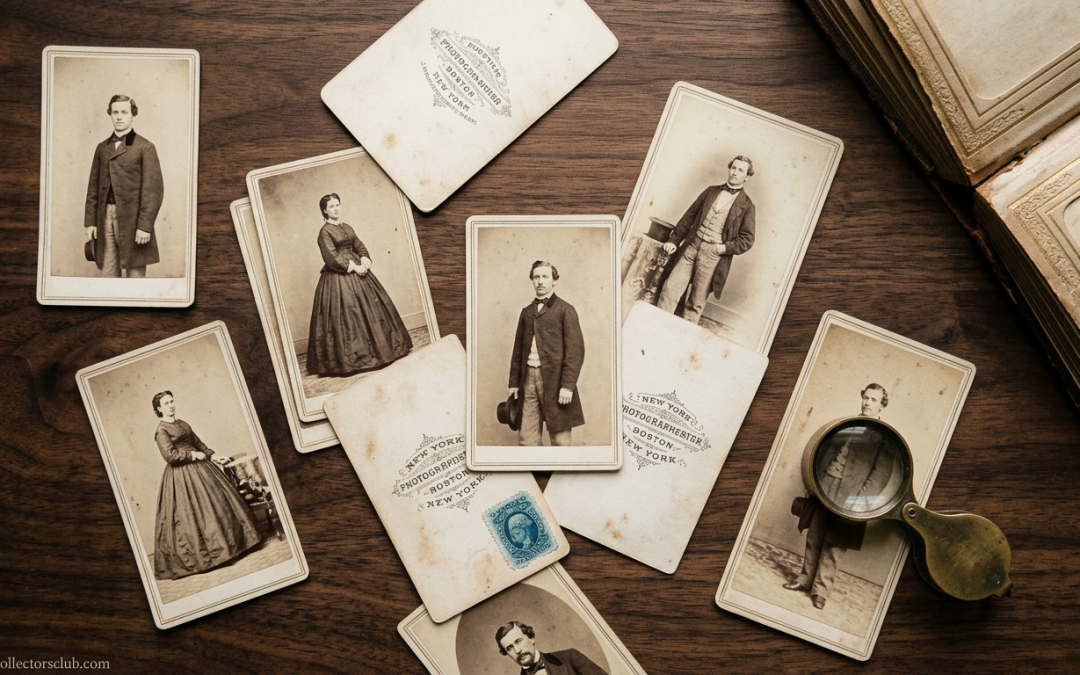
If you’ve ever opened an old family album and found rows of small portraits mounted on stiff cards, you’ve probably met the carte de visite. These little photographs were made by the millions in the 1860s and 1870s, and they still turn up everywhere: estate sales, flea markets, antique malls, and dealer boxes marked “old photos, $5 each.”
That abundance is what makes them such a good place to start collecting early photography. Most cartes de visite (CDVs for short) are affordable, but a sharp eye can spot the ones that aren’t ordinary. A Civil War soldier, a famous sitter, a rare photographer’s imprint, or a tax stamp on the back can turn a $5 card into something worth far more.
This guide walks through how to date a CDV using the clues built into the card itself, and what separates a common portrait from a collectible one.
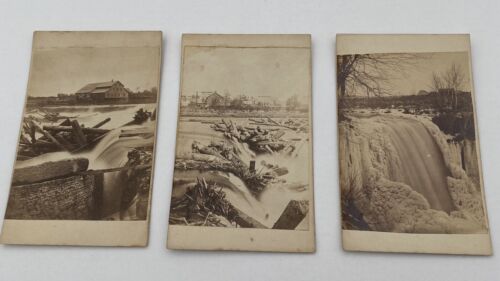
What Is a Carte de Visite?
A carte de visite is a small albumen photograph pasted onto a stiff card about the size of a 19th-century calling card. The name is French for “visiting card,” and the format came out of Paris.
The Paris photographer André-Adolphe-Eugène Disdéri patented it in 1854. According to the Los Angeles County Museum of Art, his trick was a camera with multiple lenses that made eight exposures on one glass negative. The sheet was printed, cut apart, and the images mounted on cards roughly 2 1/2 by 4 inches. Making eight portraits from one negative made photographs cheap for the first time.
The idea took a few years to catch on, then exploded. Royal portraits sold by the hundreds of thousands in England around 1860, and Americans picked up the habit just in time for the Civil War. Soldiers sat for portraits before leaving home, families traded cards, and the photo album became a fixture in parlors across the country. People also collected cards of celebrities, politicians, and generals, much the way later generations collected baseball cards.
By the 1870s, the larger cabinet card was taking over, but CDVs stayed in production into the early 1900s.
Dating a CDV by Its Card Mount
The card a photo is mounted on is your best dating tool. Card stock got thicker over the decades, corners went from square to rounded, and colors and borders changed with fashion.
The Indiana Historical Society’s notes on its carte de visite collection give a clear breakdown by decade:
| Era | Card thickness | Corners | Typical colors and borders |
|---|---|---|---|
| 1860s | Thin | Square | White or ivory card, often with a single or double colored line around the edge |
| 1870s | Medium | Rounded | White, cream, or beige; single border lines in gold, red, black, purple, or blue; some backs in pink or dark green |
| 1880s and later | Thick | Rounded | White, cream, light green, or pink; single line or no border; some gold beveled edges |
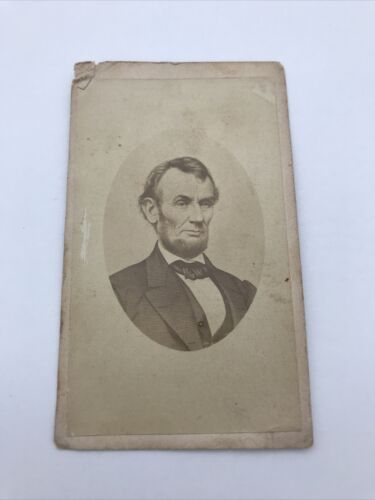
A few more details help narrow things down. The State Library of Ohio notes that factory-printed borders on the front, usually two gold lines, first showed up in 1863. Ornate cartouche frames and hand-tinted cards were popular in the 1860s but rare by decade’s end, while oval-shaped images were an 1870s trend.
Thickness is easiest to judge by comparison. If you have a few CDVs you’ve already dated, hold an unknown card next to them and the difference is usually obvious. Some serious collectors go further and measure card thickness with a micrometer.
Keep in mind that these are guidelines, not rules. Some small-town photographers kept using old card stock and props for years after city studios had moved on. The mount also dates the card, not necessarily the image, since photos were sometimes reprinted from older negatives.
Read the Back: Photographer Imprints
Always turn a CDV over. Most carry the photographer’s name and address on the back, called the backmark or imprint, and it’s one of the most useful clues you have.
The style of the imprint changed over time. Backmarks from the 1860s tend to be small and plain, often just a name and street address in simple type. By the 1880s, many studios used large, decorative designs that covered most of the card, with elaborate lettering, artist’s palettes, cherubs, and medals from photography exhibitions.
The imprint can also date a card precisely. Photographers moved often, took on partners, and changed studio names. If a backmark lists a specific address or partnership, old city directories can tell you which years the studio operated there. Many directories have been digitized, and genealogy sites and local historical societies often have them online.
The imprint also matters for value. A card from a well-known studio, like Mathew Brady’s in New York and Washington, or from a photographer working in a small or remote town, can be worth more than the same portrait from a busy city studio.
The Civil War Tax Stamp: A Two-Year Window
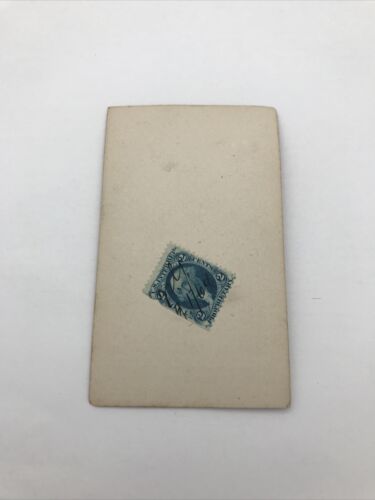
If you find a small stamp on the back of an American CDV, you’ve found the most precise dating clue there is.
To help pay for the Civil War, Congress taxed photographs. Military Images notes that the tax took effect on August 1, 1864, and ended July 31, 1866, after heavy lobbying by leading photographers including Mathew Brady and Alexander Gardner. During those two years, photographers had to attach a revenue stamp to each photo they sold.
No special photography stamp was ever printed, so studios used whatever revenue stamps they had on hand. You’ll see stamps labeled “Proprietary,” “Playing Cards,” “Bank Check,” and other categories, most featuring George Washington. The amount depended on the price of the photo, according to the Indiana Historical Society:
| Price of the photograph | Tax |
|---|---|
| Under 25 cents | 2 cents |
| 26 to 50 cents | 3 cents |
| 50 cents to $1 | 5 cents |
Most CDVs carry a 2-cent stamp, since a standard carte cost less than a quarter. A 3-cent stamp often points to a pricier sitting or a hand-colored print.
Photographers were supposed to cancel each stamp, usually with their initials, sometimes with a full date. A dated cancellation pins the photo to a specific day, which is a real bonus if you’re researching a soldier or a family.
One caution: no stamp doesn’t mean the photo wasn’t taken in that period. Some photographers skipped it, and stamps sometimes fell off or were removed. Look for a pale rectangle or traces of glue on the back.
Clues in the Picture: Props, Poses, and Clothing
Once you’ve looked at the card, study the image itself. Studio fashions changed as fast as clothing did.
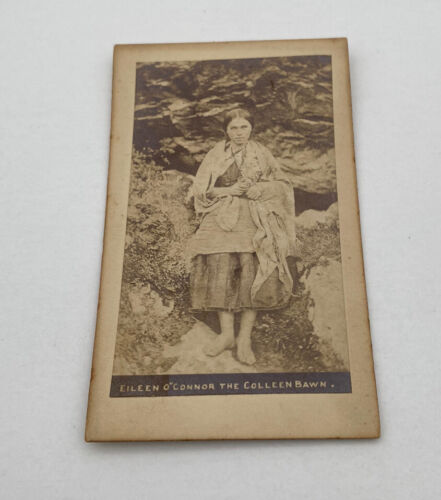
Studio props. 1860s portraits often use a classical column, a heavy drape, a balustrade, and a fringed chair. By the 1870s, rustic props like fake rocks, wooden fences, and little bridges came into style. Painted backdrops of gardens and outdoor scenes became more elaborate in the 1880s.
Poses. Early CDVs usually show the sitter full length, standing beside a table or chair with a lot of floor visible. Over time, photographers moved in closer, and head-and-shoulders or bust portraits became more common. If you spot the base of a metal stand behind the sitter’s feet, that’s a head brace, used to keep people still during long exposures.
Clothing and hair. Fashion is a useful cross-check:
- 1860s: Women wear wide hoop skirts, and hair is usually parted in the center and pulled smoothly over the ears. Men often wear loose sack coats, and full beards were common.
- 1870s: Skirts flatten in front and gather into a bustle at the back. Hairstyles get taller and more elaborate.
- 1880s: Dresses become tightly fitted through the bodice, and many women wear short curled bangs.
No single clue is final. The most reliable date comes from several clues agreeing: a square-cornered thin card, a small plain backmark, a column and drape, and a hoop skirt all point firmly to the 1860s.
What Makes a CDV Valuable?
Most CDVs are unidentified studio portraits, and they sell for very little. That’s part of their charm, since you can build a large, interesting collection on a modest budget. A small share of cards stand out, though, and these are the factors that usually make the difference.
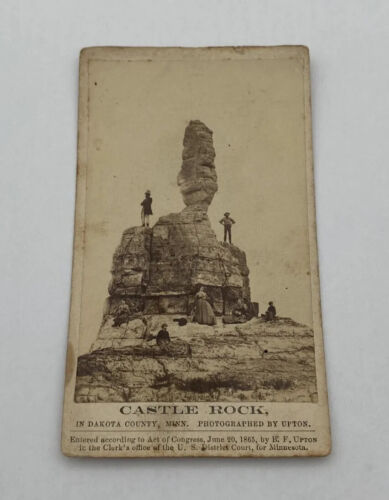
Subject matter. This matters more than anything else. Collectors pay strong premiums for Civil War soldiers, especially in uniform with weapons or regimental insignia. Portraits of African American sitters, Native Americans, people at work with the tools of their trade, and outdoor views of towns and buildings are also in demand because far fewer were made.
Identification. A name written on the back can turn an anonymous portrait into a piece of history. An identified soldier can be traced through service records, and an identified family can matter to descendants searching for their ancestors. Always keep original inscriptions intact.
Famous sitters. CDVs of presidents, generals, actors, and other celebrities were sold widely in the 1860s. Common examples are affordable, but scarce images, original studio prints, and especially cards signed by the sitter can be very valuable.
The photographer. Work from top studios, early photographers, or studios in remote frontier towns often brings more.
Condition. Look for a clear, well-contrasted image without heavy fading, a mount free of major stains or tears, and corners that haven’t been trimmed. Some owners cut down cards to fit frames or albums, and trimmed corners reduce value.
Extras. A revenue stamp, particularly with a dated cancellation, adds interest and helps confirm a date.
Storing and Handling Your CDVs
Albumen prints are more delicate than they look, and good storage keeps them from fading, staining, or curling.
Use the right sleeves. The Northeast Document Conservation Center recommends enclosures that pass the Photographic Activity Test (PAT), an international standard for photo storage products. Uncoated polyester or polypropylene sleeves work well for CDVs. If you use paper envelopes, choose unbuffered paper, because albumen prints are sensitive to alkaline materials. Avoid PVC (often sold as “vinyl”) and glassine, both of which can damage photos over time.
Handle with care. Hold cards by the edges, and wear nitrile gloves or at least wash your hands first. Skin oils can damage the image surface.
Watch the environment. Store your collection somewhere cool, dry, dark, and stable. Attics, basements, and garages are the worst places, since heat and humidity swings speed up deterioration.
Leave original albums intact. A complete period album often has more historical and market value than the same cards sold separately, and prying cards out of tight album slots can tear them. If an album is falling apart, consult a conservator before taking it apart.
Don’t write on the photo. Put notes on the sleeve or envelope instead, using pencil or an archival pen. Never add tape, glue, or new labels to the card itself.
Disclaimer: This article is for general informational purposes only and is not a formal appraisal or authentication. Dating guidelines are general and have exceptions, and market values vary with condition, demand, and provenance. For high-value items, consult a qualified appraiser or photography specialist.
© 2026 by antiquecollectorsclub.com All rights reserved. No part of this document may be reproduced or transmitted in any form or by any means, electronic, mechanical, photocopying, recording, or otherwise, without prior written permission.